
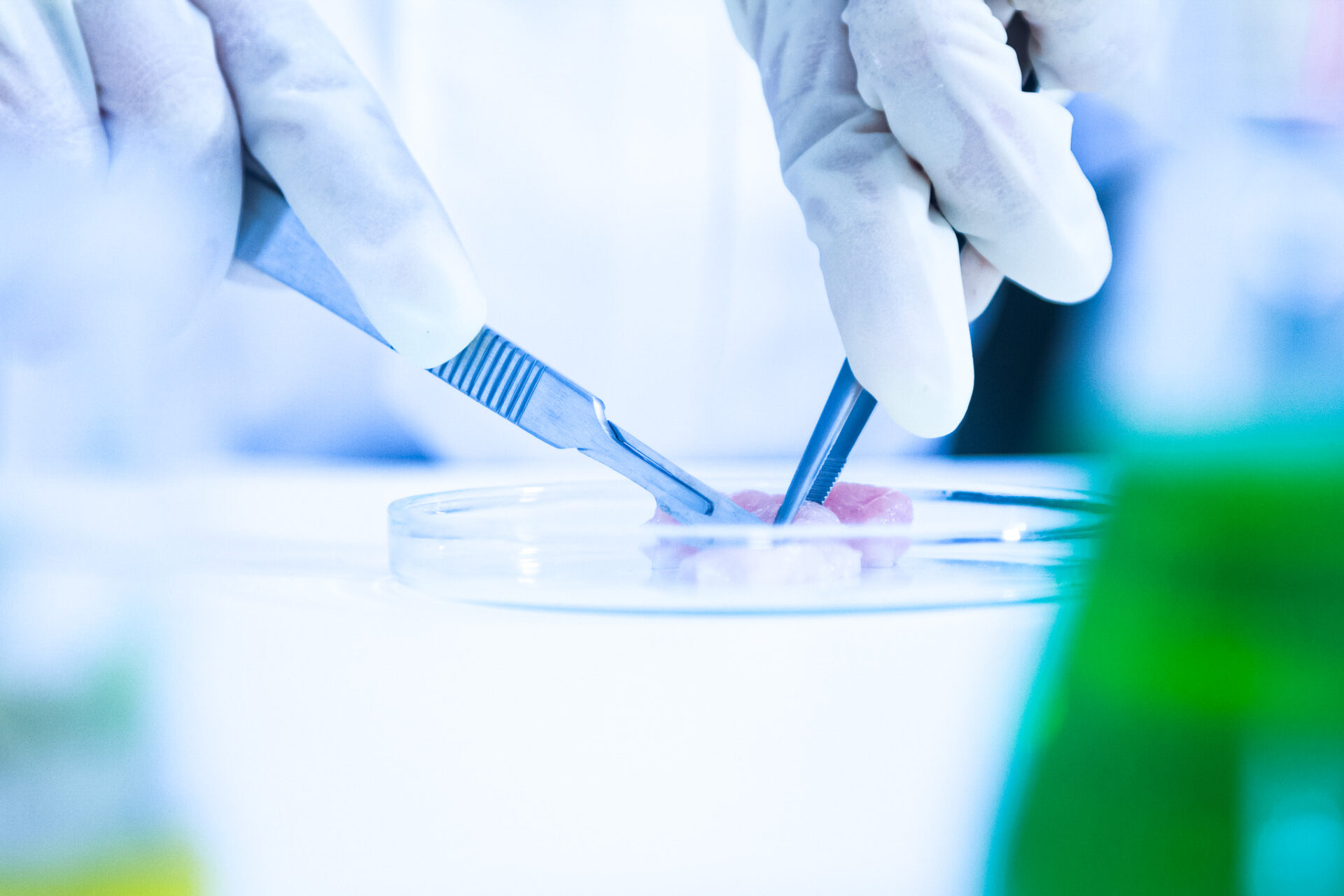
ProbeAX – Fast, Reliable Biopsy Preparation for Modern Labs
In many clinical microbiology and molecular diagnostics laboratories, workflows are highly optimised — from PCR assays to extraction kits. Yet one critical step is often overlooked.
Biopsy Sample Preparation
This step can determine whether a pathogen is detected — or missed entirely. The underlying challenge is that variability begins even before the analysis stage.
From the moment a biopsy is collected, multiple sources of variability are introduced:
- inconsistent tissue disruption
- contamination during handling
- loss of viable microorganisms
- variability in DNA/RNA recovery
Even small differences at this stage can lead to:
- false-negative results
- inconsistent PCR amplification
- reduced diagnostic sensitivity
- repeated analyses and delays
What Studies Show — Preparation Directly Impacts Detection
Recent research confirms the critical importance of proper sample preparation. A comparative study on human tissue processing demonstrated that mechanical homogenisation provides significantly higher bacterial recovery than bead milling, sonication, or manual processing. Similarly, an in vitro study showed that optimised tissue disruption improves microbial viability and increases overall yield across a range of sample types.
Many laboratories still rely on:
Manual processing
- operator-dependent results
- inconsistent tissue disruption
- high contamination risk
Bead-based systems
- strong but uncontrolled mechanical force
- variability between runs
- noise and workflow limitations
- not designed for sterile OR integration
These approaches can work – but they are not optimised for standardised biopsy workflows.
A Different Approach: Controlled, Standardised Homogenisation
ProbeAX was developed specifically to address these limitations.
Rather than relying on brute-force disruption, it uses a controlled ceramic rasp mechanism to achieve reproducible tissue homogenisation.
Key features include:
- Direct transfer in the operating theatre
→ Biopsy samples can be placed into a sterile tube immediately after collection - Closed-system processing
→ Minimises the risk of contamination - Controlled mechanical disruption
→ Reduces variability between samples - Compatibility with multiple workflows
→ Suitable for both culture-based and molecular diagnostics
What This Means in Practice
By standardising biopsy preparation, laboratories can achieve:
- More consistent results across samples
- Improved recovery of microorganisms and nucleic acids
- Reduced need for repeat analyses
- More efficient workflows
Conclusion: Better Preparation Leads to Better Diagnostics
Biopsy preparation is not merely a preliminary step — it is a critical determinant of diagnostic quality. As laboratories continue to optimise downstream processes, focus is increasingly shifting upstream towards standardised, reproducible sample preparation. Ultimately, accurate detection depends on effective extraction — what is not extracted cannot be detected.
Want to See How This Works in Practice?
If you would like to learn more about ProbeAX or evaluate the system in your laboratory, we would be pleased to hear from you.
Sources for the studies:
Askar, M., Ashraf, W., Scammell, B. Bayston, R. (2019). Comparison of different human tissue processing methods for maximization of bacterial recovery. European Journal of Clinical Microbiology and Infectious Diseases, 38(1), 149–155. https://doi.org/10.1007/s10096-018-3406-4
Cai, Y., Fang, X., Zhang, L., Yang, X., Nie, L., Huang, Z., Li, W., Zhang, C., Yang, B., Guan, Z., Zhang, W. (2021). Microbial yield from infectious tissues pretreated by various methods: An in vitro study. BMC Musculoskeletal Disorders, 22, 209.https://doi.org/10.1186/s12891-021-04071-5